
Quick Specs & Test Results
Before we dive into the nuances of soundstage and clamping force, here is the raw data from our acoustic laboratory tests comparing the Sony WH-1000XM5 against the Bose QuietComfort Ultra.
| Model | 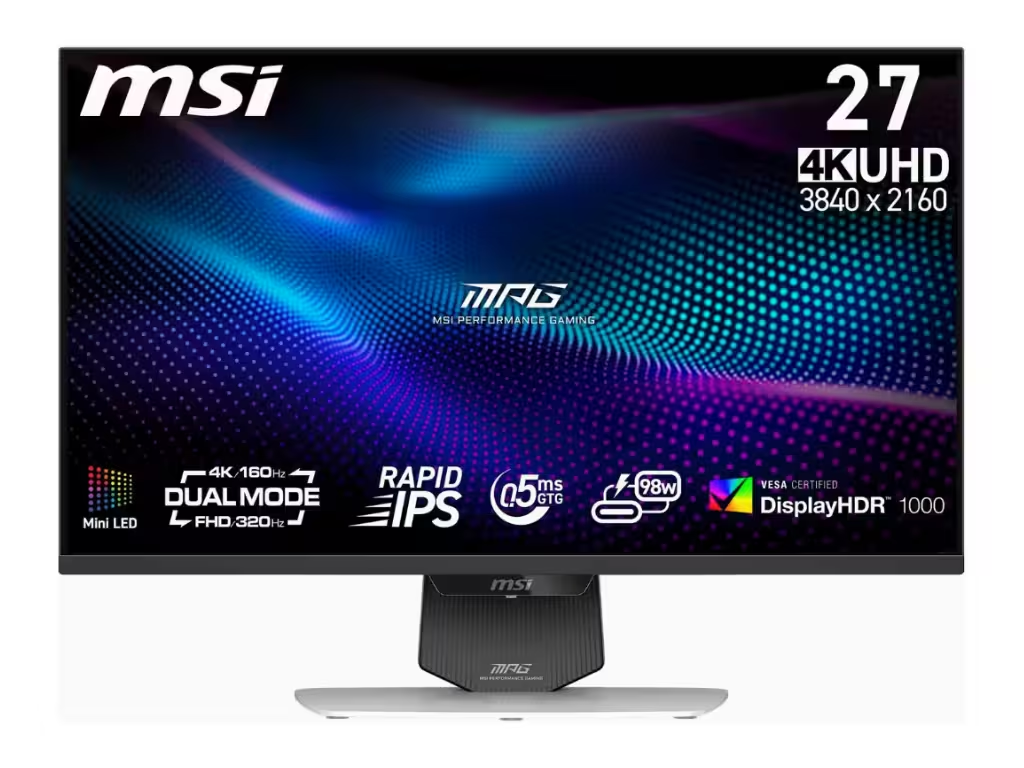 MSI MPG 274URDFW E16MCheck Price MSI MPG 274URDFW E16MCheck Price |  Alienware AW2725QFCheck Price Alienware AW2725QFCheck Price |
|---|---|---|
| Low Frequencies (Engines) | Excellent | Outstanding |
| Mid/High (Voices) | Outstanding | Excellent |
| Wind Noise Reduction | Good | Excellent |
| Battery Life (ANC On) | 30 Hours | 24 Hours |
| Weight | 250g | 253g |
Design and Comfort: The Battle of Portability
The philosophical differences between these two audio giants are immediately apparent. Bose stuck to its roots with the QuietComfort Ultra, offering premium materials including aluminum arms and a folding design that fits neatly into a compact, pill-shaped case.
When it comes to clamping force and long-term comfort, both excel. However, the Bose feels slightly lighter on the crown of the head during 8-hour work sessions, making it our slight favorite for pure ergonomics.
Audio Fidelity & Software Tweaking
Sony takes a clear lead in overall sound customization. The Sony Headphones Connect app remains the gold standard for EQ tweaking, and the inclusion of LDAC provides a tangibly better listening experience for high-res audio purists on Android.
“Bose’s Immersive Audio feature is a fun parlor trick that widens the soundstage, but it drains the battery significantly. Sony’s sound profile is more dynamic and natural right out of the box.”
Strengths
- Sony wins in battery life and microphone quality
- Bose wins in portability and extreme comfort
Weaknesses
- Sony's case is bulky
- Bose lacks a customizable EQ that rivals Sony's app
The Bottom Line Verdict
This is a clash of two titans where the “best” entirely depends on your lifestyle.
If you’ve made your choice, check the current availability below: