The KWYAB Standard for Gaming & Streaming Hardware
In the current market, the industry is obsessed with “gamer” aesthetics and flashy RGB lighting that often masks mediocre engineering. Brands push high refresh rates and theoretical bitrates, completely ignoring how these devices operate under the thermal stress of an eight-hour session. Our approach to gaming and streaming gear fundamentally rejects this PR-driven narrative. We focus strictly on continuous performance, component longevity, and the invisible metrics like frame-time consistency and signal-to-noise ratios.
Whether you are competing in high-stakes esports, building a professional broadcasting suite, or exploring immersive virtual worlds, every piece of your ecosystem must work in synergy. A single weak link—be it a sensor with smoothing issues or a capture card with high pass-through latency—can ruin an otherwise premium experience. We analyze the entire interactive ecosystem to ensure you invest in hardware that actually delivers when the pressure is on.
Real-World Execution Over Marketing Hype
Our evaluation methodology is designed to break through the illusions created by cherry-picked stats. When we test gaming and streaming hardware, we look for the architectural truths that dictate the competitive edge:
- Sustained Frame Pacing vs. Peak FPS: We measure stability after hours of heavy load, exposing the thermal throttling and micro-stuttering that most manufacturers try to hide behind “average” numbers.
- Input Fidelity and Latency: We inspect the physical switches, sensors, and polling rates, ensuring that your physical actions are translated to the digital world with zero perceptible delay.
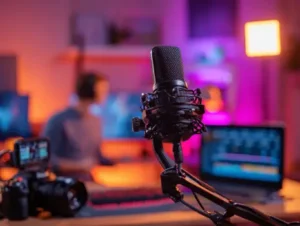
- Broadcast Quality and Encoding Efficiency: We evaluate how streaming gear handles complex scenes without dropping frames or sacrificing visual clarity, focusing on hardware-level stability.
- Ergonomics and Material Durability: Gaming gear undergoes intense physical stress. We monitor the quality of plastics, PCB soldering, and cooling solutions to ensure your investment survives years of daily use.
Building a High-Performance Interactive Ecosystem
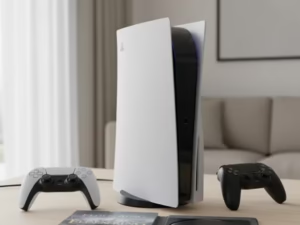
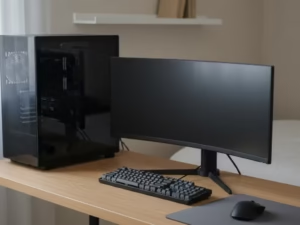
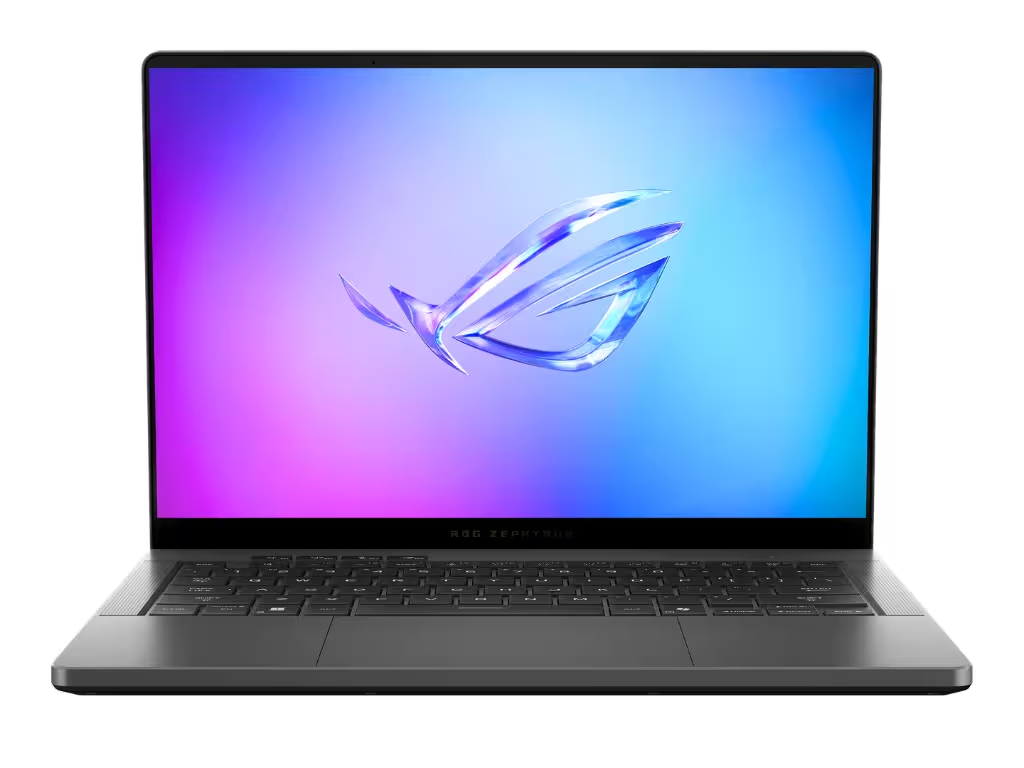
The gaming and streaming landscape encompasses a vast array of interconnected technologies. The core machines—whether consoles or PCs—handle the heavy lifting, while specialized peripherals translate your skill into data. Audio-visual gear ensures your broadcast meets professional standards, and VR interfaces push the boundaries of immersion. By applying our rigorous, anti-BS testing standards across all these categories, we help you navigate the noise.
We do not care about aggressive branding or celebrity endorsements unless they are paired with actual engineering excellence. If a headset has a bloated bass profile that masks spatial cues, or if a streaming deck lacks intuitive software support, we will call it out. Your gear needs to empower your performance, not hinder it. Explore our comprehensive evaluations to find the exact tools you need to build an uncompromising gaming and streaming environment.