Asus ROG Swift PG32UCDM3 vs Alienware AW3225QF: Ultimate 32-Inch Comparison
Enfrentamos a los dos mejores monitores 4K QD-OLED de 32 pulgadas del año: Asus ROG Swift PG32UCDM vs Alienware AW3225QF. ¿Cuál deberías comprar?

Your digital footprint is constantly monitored, logged, and monetized. We bypass the aggressive marketing campaigns to relentlessly test encryption protocols, actual network speeds, and strict zero-log claims. Discover the VPNs and security tools that genuinely protect your privacy, rather than just selling you the illusion of it.
Our experts are currently working on content for this section. Check out our latest global analysis below.
Enfrentamos a los dos mejores monitores 4K QD-OLED de 32 pulgadas del año: Asus ROG Swift PG32UCDM vs Alienware AW3225QF. ¿Cuál deberías comprar?
Analizamos los mejores monitores gaming 4K de 2026. Desde paneles QD-OLED hasta híbridos de 480Hz, estos son los ganadores avalados por nuestro laboratorio.
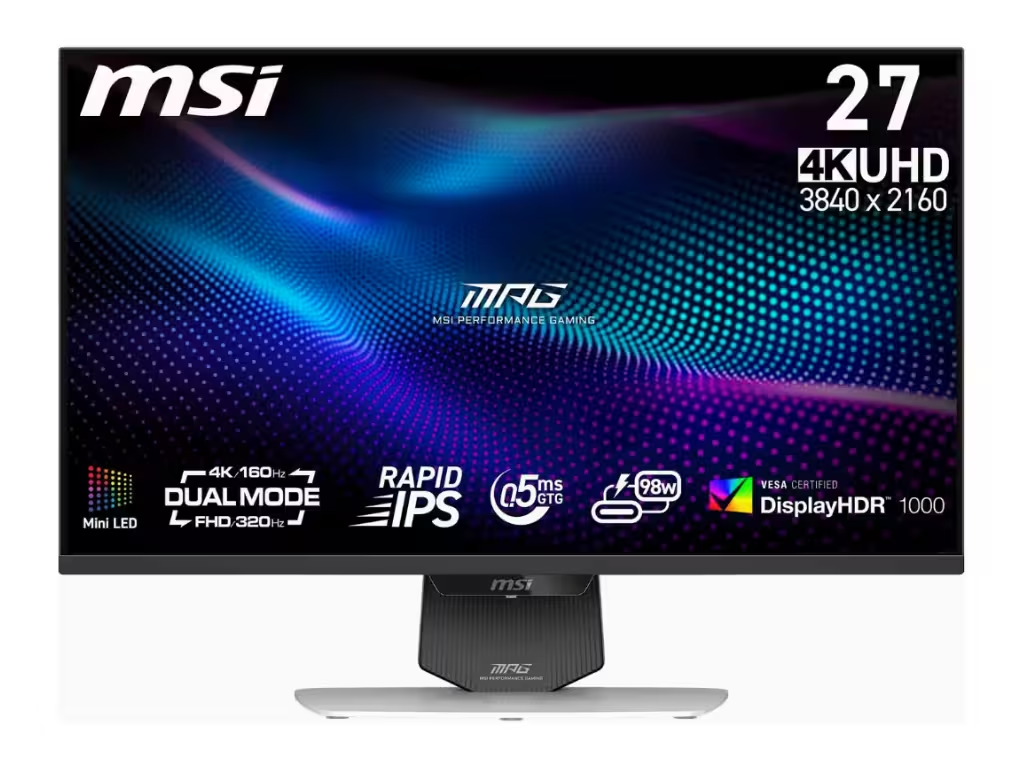
We tested the MSI MPG 274URDFW E16M. Discover if this 4K 160Hz white monitor is the ultimate gaming display or just an overpriced aesthetic piece.

We tested the MSI MPG 274URDFW E16M. Discover if this 4K 160Hz white monitor is the ultimate gaming display or just an overpriced aesthetic piece.
The VPN & Security market is notorious for massive advertising budgets and exaggerated claims of “military-grade encryption” or “total anonymity.” At KnowWhatYouAreBuying, our approach cuts right through this noise. We do not take privacy policies at face value; instead, we rely on rigorous, independent testing to evaluate how these security suites perform when it actually matters. Whether you are connecting to a public Wi-Fi network or securing a remote workstation, you need empirical proof that your data remains yours.
Our hands-on reviews of VPNs, password managers, and endpoint security software are designed to find their breaking points. A shiny interface is irrelevant if the underlying protocol leaks your actual IP address. In our evaluations, we focus relentlessly on:
In today’s threat landscape, relying on default OS protections or free privacy apps is a massive risk. However, throwing money at the most heavily advertised security suite is equally misguided. Our goal is to highlight the privacy tools that combine impenetrable encryption with a lightweight system footprint. We evaluate kill-switches, split-tunneling features, and malware detection rates using live threat samples.
By relying on our objective, data-driven tests, you can build a digital fortress that protects your personal identity and sensitive information without compromising your system’s performance or your daily browsing experience.
No, total anonymity is a marketing myth. A VPN provides high levels of privacy by hiding your IP address and encrypting your traffic, preventing ISPs from tracking your activity. However, you can still be tracked via browser cookies, malware, or your own online behavior.
We look beyond the marketing claims and verify zero-log policies by checking for independent, third-party security audits. We also favor providers that utilize RAM-only server infrastructure, which physically prevents data from being stored long-term.
Yes, all encryption adds overhead which results in some speed loss. In our testing, we measure exactly how much speed is lost across different protocols like WireGuard and OpenVPN to find the services that offer the best balance of security and performance.
A DNS leak occurs when your web browsing requests bypass the encrypted VPN tunnel and are sent through your default ISP, exposing the websites you visit. Our tests use specialized tools to ensure the VPNs we recommend successfully block all DNS, IPv6, and WebRTC leaks.
Generally, no. Many free VPNs monetize their service by logging and selling your browsing data, injecting ads, or offering weak encryption. We strongly recommend investing in a reputable, low-cost premium service to ensure genuine privacy.
We test password managers by analyzing their encryption standards (like AES-256), their zero-knowledge architecture, and their practical usability. We evaluate how reliably they auto-fill complex forms and sync across different operating systems and browsers.
While default OS protections have improved, dedicated security software provides advanced defenses against zero-day threats, ransomware, and phishing attacks. Our tests expose malware to these suites to verify they offer a necessary, upgraded layer of defense.
A reliable privacy setup should include a strict no-logs policy, the WireGuard protocol for fast speeds, a functional kill-switch to protect data if the connection drops, and strong independent audits verifying their security claims.